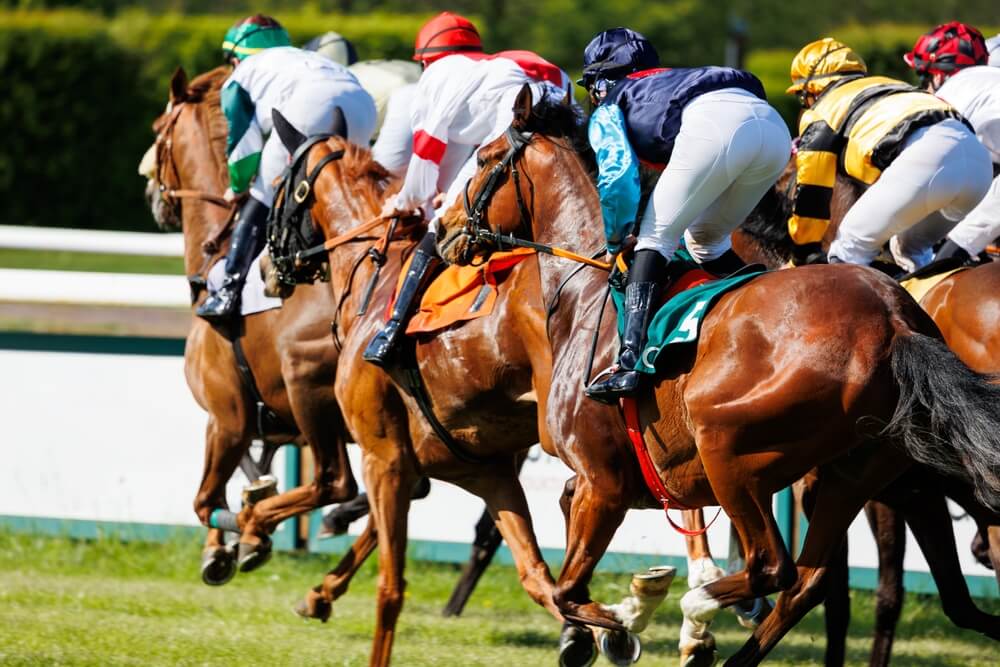
Betting Village’s horse racing nap of the day is our single strongest selection from the day’s UK and Irish racing, posted at the top of this page. A nap is our most confident selection of the day, a term that comes from Napoleon, the 19th-century French card game in which calling “Napoleon” signalled the best hand at the table.
A nap is not simply the favourite in a race. It is the one selection from across the whole day’s racing that a tipster is most confident in backing, chosen from potentially dozens of races run across several UK and Irish meetings on a typical day. Where a tipster puts up several tips, the nap is the one they would back ahead of all the others if they could only have a single bet.
Picking a nap means weighing several pieces of information against each other rather than relying on any single stat, since no one factor tells the whole story on its own.
Recent form matters, but so does the context behind it. A horse’s last run needs reading alongside the going it ran on, since a horse that struggled on soft ground can look a different proposition back on a surface it handles well. Course and distance record adds another layer; some horses are specialists at a particular track or trip and consistently outrun their odds there.
Trainer form over the past few weeks can flag a yard that is sending out winners, which is worth knowing alongside the individual horse’s own figures. A jockey booking matters too; a leading rider taking the ride on a horse they haven’t partnered before can be a signal, particularly when it represents a step up in class or a change of tactics.
Weight and official rating set the terms a horse is racing off, and class tells you whether it is stepping up, dropping down, or racing at its right level. Market movement in the hours before a race can reflect information not yet visible in the form book, so a horse being steadily backed is worth noting even when the published form doesn’t obviously explain it.
Each day’s nap selection is shown in the module above, along with the reasoning behind it.
The price decides this more than anything else. An each-way bet splits your stake between the horse winning and the horse finishing in a specified number of places, at a fraction of the win odds, usually 1/4 or 1/5, depending on the race type and the number of runners. Here is how a £10 each-way bet (£20 total stake) compares with a £20 win single at three different prices, assuming 1/5 place terms.
| Price | Each way if it wins | Each way if it only places | £20 win single if it wins |
|---|---|---|---|
| 2/1 | £44 | £14 (a £6 loss) | £60 |
| 5/1 | £80 | £20 (stake back) | £120 |
| 10/1 | £140 | £30 (£10 profit) | £220 |
The pattern is clear. At short prices like 2/1, backing each way and the horse only placing loses you money overall, because the place part of the bet doesn’t return enough to cover the win stake you lose. At higher prices, the place part starts to cover the win stake and eventually turns a profit even without a win. That is why each way rarely suits a short-priced nap but can make real sense on a bigger-priced one. Place terms and the number of places paid vary by race type, field size, and bookmaker, so always check the specific terms before placing the bet rather than assuming 1/5 applies everywhere.
Best odds guaranteed (BOG) means that if you take an early price and the starting price (SP), the official price at the race’s off, ends up bigger, you’re paid out at the higher price instead. It’s worth checking whether your bookmaker offers this on the race your nap runs in, since it removes the downside of backing early. For the full details on how this works, see our best odds guaranteed guide.
If a horse is declared a non-runner after you’ve placed a bet, Rule 4 applies, a deduction from your winnings scaled to the odds of the withdrawn horse, reflecting that the remaining runners now have a shortened field to beat. The deduction is set by the bookmaker in line with industry guidance and varies with how short the withdrawn horse’s price was. Always check your bookmaker’s own Rule 4 scale, since the exact deductions can differ slightly between operators.
A single nap bet is straightforward, but it can also form part of a larger bet. Adding it to a Place Acca combines it with other selections purely on the place part of the bet, which suits backing several fancied horses without needing all of them to win outright.
A Lucky 15 or Yankee spreads the nap across multiple bet combinations alongside other selections, which can return a profit even if not every leg comes in. As with any multiple, adding more selections lowers the overall chance of the whole bet landing, even when each leg looks reasonable.
Festival racing brings a different dynamic to nap selections, with bigger fields, tighter form lines between well-matched horses, and significantly more betting interest driving market movement. The same method still applies, form, going, course form, trainer and jockey angles, and the offer price, but each factor carries more weight when the whole racing world is watching the same races. See our Cheltenham tips and Aintree tips for festival-specific coverage.
A nap is still one horse in one race, and it can lose like any other bet, however strong the reasoning behind it. Stake accordingly, and if betting stops feeling like entertainment, support is available from BeGambleAware and GamCare.
No. A nap is the tipster’s most confident selection based on their own analysis, not automatically the shortest-priced horse in the race. It can be the favourite, but it is just as often a horse the tipster believes is underpriced relative to its real chance.
The term comes from Napoleon, a 19th-century French card game in which a player would call out “Napoleon” to declare they held the winning hand. The phrase was shortened to “nap” and adopted by racing tipsters to describe their single best bet of the day.
At a short price, the place part of an each way bet doesn’t return enough to make up for losing the win stake if the horse only places rather than wins, as the table above shows at 2/1. Each way starts to make more sense as the price gets bigger, where the place return alone can cover the stake or turn a profit.
If the nap is declared a non-runner before the race, most bookmakers void that part of the bet and return your stake, though a bet placed as part of a multiple may be settled differently. Check your bookmaker’s own rules on non-runners before assuming how your specific bet will be treated.
<!-- FLAGGED: This FAQ was highlighted in the source Word doc and has NO answer written. Left out of the live FAQ list rather than published headless. Add an answer and reinstate as an H3 before publishing:
Building a multiple? See today’s Place Acca tips
18+. Please gamble responsibly.